I went over all the grooming tools last week. This week I'm going to describe a basic grooming. I've found this is best after exercise, when the horse is relaxed and a little tired. If you're riding the horse, I pull him out of his stall and start with light brushing. I just get the majority of the dirt off with a plain black rubber curry followed up by a hard brush in the areas that will be affected by tack or leg protection. After the ride when the horse is fully cooled, put the horse back in his stall and let him hang out, chew on some hay and get a drink while you clean tack and put everything away.
With yearlings to start, I use a mane and tail brush. We brush our yearling manes and tails every day and they are kept completely tangle free. On a regular horse, I start with the curry comb. This is probably the most important step to getting your horse clean and shiny. Currying loosens up all the dirt and dander and gives the horse a nice massage. I tend to use a lot of different curries for different purposes. I generally start with a black rubber curry type and use it in a circular or side to side motion all over the horses body. It depends on the horse though. Some horses need softer curries, while others can tolerate hard curries. Always use a rubber mitt or special face curry on the legs or face. If the horse is extra sweaty and you're unable to bathe or hose off, using wintergreen rubbing alcohol on a towel will remove all the dirt from that area. I try not to use alcohol regularly because I feel like it would dry out the coat. If the sweat has dried already, using one of the plastic Shed Flowers in a circular motion works well. If the horse is shedding a lot, the Grooma Grooma can be used now to lift all the loose hair off. In certain severe circumstances, I will use a dry microfiber or hand towel after currying. It helps pick up a lot of the gross dirt and dander you just lifted that sometimes just refuses to be brushed off the coat any other way. Curries also need to be check every few weeks or months depending on how many you groom a day to make sure the rubber has not worn down too far. A curry that is worn will not clean nearly as effectively.
Next, use a hard/dandy brush. Grooming is a vigorous process! When using the hard brush, use short, flicking strokes. There should be dirt flying off your horse. If it isn't, you either didn't curry enough to lift the dirt or you aren't brushing hard enough. Use the hard brush in the direction of the hair growth all over the body. Keep listening to your horse because some tolerate this better than others. Digby hates being hard brushed but most of the yearlings I groom actually seem to enjoy this part. Use the hard brush on legs and face if the horse tolerates it but with lighter strokes then on the body. Like I said before, don't forget key areas like the elbows, pasterns and base of mane.
Next, use a body brush in the direction of the hair growth. This is a very important step. This brush will pick up all the dander and dirt that was lifted by the curry and what's left over from the hard brush. Your brush WILL get dirty quickly if you're grooming correctly so make sure you clean it by wiping it on a towel or using a metal curry every few strokes. This brush can be used on any body part, including the legs and face. I try to avoid using it on the legs because they tend to get pretty clean with the hard brush only. The body brush is also good for that oh so hard to banish dust/dirt on the top of their hindquarters. If you need to keep your grooming tools budget to a minimum, buying a high quality body brush will benefit you best in the long run out of any other grooming tool.
Use a sponge, warm damp towel or baby wipes next to clean out ears, nose and around the eyes. I occasionally use a baby wipe to clean their bridle path if it just didn't seem to get clean while brushing. Use another towel or sponge to clean behind the tail and near the sheath or udder.
I generally will use the mane and tail brush now. I don't brush out the tails on riding horses often. I think leaving them alone tends to make them the thickest and longest. I will brush out forelocks and manes though. Use a silicone spray (Show Sheen, etc) to detangle if you do not have time to pick out the knots by hand. Whatever method you use, you need to be careful not to break hairs. Manes and tails take a looong time to grow in! After that, I hoof pick. I won't go into details about hoof picking because it is fairly straight forward. Refer to the USPC Manual if you have questions about hoof picking.
As a finishing touch, I rub the horse down with a hand towel. You can also use your hands as the oils from your skin help the horses coat. I use white towels so I can see if there was any dirt left. I do not necessarily use the same towel on the same horse every day. When it's dirty, I launder it. I know people who use the same towel after every grooming on the same horse, every day. The towel helps distribute the oils back onto the coat. It definitely works but I think using a new, clean towel works fine as well. Use the towel in circular motions, ending with brushing the hair in the correct direction. Rub the horse for as long as you have time, as this toweling really helps get them shiny.
That's all for this week! If you have any questions or comments, please leave them for me! I'll be gone for work until the 8th so there won't be a grooming tip tuesday next week, nor will you be hearing any Digby updates. :( I promise to update you as soon as I get back!

Showing posts with label combs. Show all posts
Showing posts with label combs. Show all posts
Tuesday, September 27, 2011

Tuesday, September 20, 2011
Grooming Tip Tuesday - Tools of the Trade
Grooming Tip Tuesday! Tools of the Trade
Before I get into the basics of grooming, I'm going to discuss what brushes I personally use. It's in no particular order, as I'll get into that next week. Again, this is just what I use so by all means test them out on your own horses. Different horses prefer different types of brushes depending on their coat types and if they are thin skinned or not. Grooming should take about 30 minutes. 45 minutes is actually the best but it's a bit unrealistic for the normal person who would probably like to ride, as well as groom their horse in their limited time schedule. You're going to want some container to keep all your brushes in. If you like to see all your items, a grooming tote works best. If you have a place to spread your brushes out, you can use a simple bucket. A grooming bag is also an option. They usually have lots of pockets to keep things semi organized.
Curry Combs
Depending on what kind of horse you have, their coat, and how thin skinned they are, the currys you use will vary. Curry combs are used to loosen up dirt and dandruff and provide the horses skin and muscles with a massage. I use a variety of curries for a variety of different things.

I use a rubber grooming mitt for more sensitive areas like the legs and face, if the horse allows. They're good for shedding and getting off dirt in areas where a horse does not tolerate a normal curry.


Hard/Dandy/Stiff brush

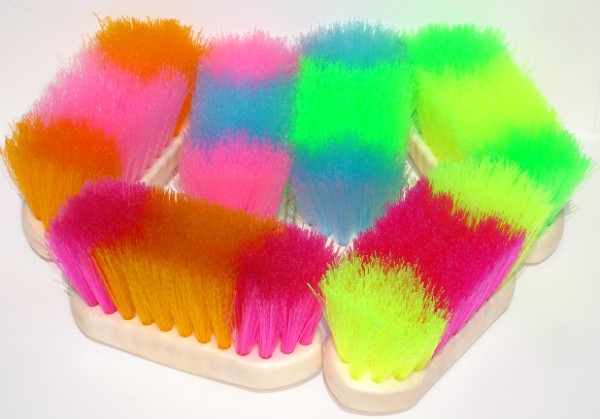
 I like both synthetic and natural brushes for these. Natural brushes make them shinier in my opinion but if you're buying them yourself, synthetic brushes are often $3 versus $20 for a natural brush. It's up to you. Hard brushes are used in short flicking motion, to lift the dust from the coat. Use very hard and short strokes. You should see dust flying off your horse! You can use these all over except generally the face. Make sure you get the base of the mane and pasterns. These are often overlooked parts and all very important!
Medium/Body brush

This is used to remove all the dirt and dust you just lifted from the coat by currying and the hard brush. The brush should get very dirty quickly as its taking all the dirt and dander from the horses coat. Clean it often by wiping it with a towel or by using a metal curry. Brush horse all over in the direction of the hair growth.
Soft/Finishing Brush

Not entirely necessary but I like using a very soft brush to follow up. I just think it gets the last little bit of dirt up from the coat for a final "polishing". They tend to be made of goat hair or some other super soft material. Use the same way as the medium brush.
Mane and Tail Combs


These can be combs or brushes. The key is to not pull out any hairs. Which ever you prefer, start from the bottom of the mane or tail and work your way up. Detangler (ShowSheen, Vetrolin, Mane and Tail, and Cowboy Magic all make their own detanglers) can be added if you're short on time (like me) or patience. In theory, manes and tails should be worked out by hand but honestly, who has time for that? Pulling combs should be used for pulling only in my opinion but I know people that use them as combs as well.
Hoof Pick


Used for, well, picking out hooves. Remove all dirt and make sure there are no rocks/foreign objects lodged in their shoes. I'm a big fan of the cheap 89 cent hoof pick. There are plenty of fancy, schmancy hoof picks but honestly the cheap ones work just fine. Why waste your money? A hoof pick with a brush is very nice to have and still cheap.
Extras
Other things you may want to have around are:
- Scissors (for quick cutting of fetlocks or bridle paths)
- Unscented baby wipes (great for noses, ears and those who dislike their face being brushed... Ahem DIGBY!)
- Towels (We used normal small hand towel sized ones that we buy in bulk at Costco at work. Digby gets microfiber towels that I got from the car parts store. Works well for a rub down and final polish after brushing)
- Baby powder/corn starch (works excellent in getting those white markings blindingly white! Add to marking when it's still wet from being bathed and brush out once dry)
- Blueing shampoo/Quik Silver (a must have for white socks or stockings!)
- Any shampooing items you find necessary (Bathing will dull a coat if you do it often so keep bathing to a minimum. Trust me, your horse will thank you and they can be just as clean without a bath as they can with one if you work at it!)
- Steel wool or brillo pads (work well instead of paying for an expensive hoof brush to remove dirt and other "grossness" from hooves)
- A&D ointment (works wonders on healed cuts to help grow hair back. Do not use on any wounds that have not healed yet)
Recommending Reading
The United States Pony Club Manual
Braiding Manes and Tails
Grooming
Grooming to Win (the best book for discipline specific answers)
Before I get into the basics of grooming, I'm going to discuss what brushes I personally use. It's in no particular order, as I'll get into that next week. Again, this is just what I use so by all means test them out on your own horses. Different horses prefer different types of brushes depending on their coat types and if they are thin skinned or not. Grooming should take about 30 minutes. 45 minutes is actually the best but it's a bit unrealistic for the normal person who would probably like to ride, as well as groom their horse in their limited time schedule. You're going to want some container to keep all your brushes in. If you like to see all your items, a grooming tote works best. If you have a place to spread your brushes out, you can use a simple bucket. A grooming bag is also an option. They usually have lots of pockets to keep things semi organized.
Curry Combs
Depending on what kind of horse you have, their coat, and how thin skinned they are, the currys you use will vary. Curry combs are used to loosen up dirt and dandruff and provide the horses skin and muscles with a massage. I use a variety of curries for a variety of different things.
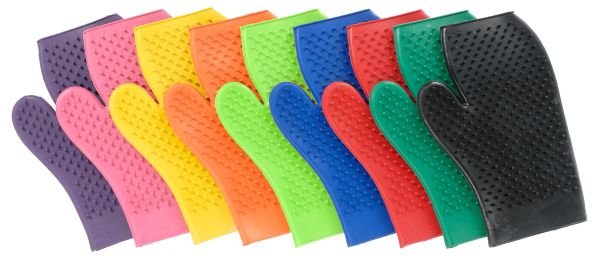
I use a rubber grooming mitt for more sensitive areas like the legs and face, if the horse allows. They're good for shedding and getting off dirt in areas where a horse does not tolerate a normal curry.

I use a plain black rubber curry for general body currying. These are semi flexible and work best with "shark" teeth rather than rounded edges.

I've found that the "grooma groomer" works best for getting up loose hair on horses that are shedding. Most horses really enjoy when you use this on their muscles after exercising hard.

Two of my new favorite curries are the Epona Shed Flower and the Epona Curry Flower. The shed flower works really well on sweat stains (remember some of us can't bathe the horses we're grooming and need to get rid of sweat) and the curry flower works well on really dandruff-y skin. They might be silly because they're in flower shape but they both work well... so I'll over look it.

Hard/Dandy/Stiff brush

Medium/Body brush

This is used to remove all the dirt and dust you just lifted from the coat by currying and the hard brush. The brush should get very dirty quickly as its taking all the dirt and dander from the horses coat. Clean it often by wiping it with a towel or by using a metal curry. Brush horse all over in the direction of the hair growth.
Soft/Finishing Brush
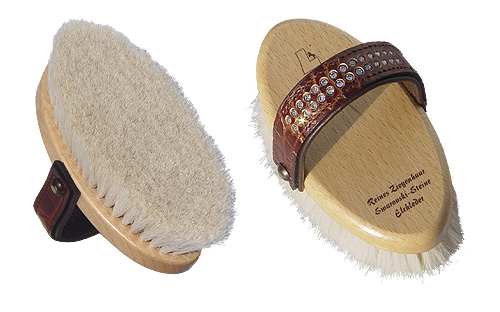
Not entirely necessary but I like using a very soft brush to follow up. I just think it gets the last little bit of dirt up from the coat for a final "polishing". They tend to be made of goat hair or some other super soft material. Use the same way as the medium brush.
Mane and Tail Combs


These can be combs or brushes. The key is to not pull out any hairs. Which ever you prefer, start from the bottom of the mane or tail and work your way up. Detangler (ShowSheen, Vetrolin, Mane and Tail, and Cowboy Magic all make their own detanglers) can be added if you're short on time (like me) or patience. In theory, manes and tails should be worked out by hand but honestly, who has time for that? Pulling combs should be used for pulling only in my opinion but I know people that use them as combs as well.
Hoof Pick


Used for, well, picking out hooves. Remove all dirt and make sure there are no rocks/foreign objects lodged in their shoes. I'm a big fan of the cheap 89 cent hoof pick. There are plenty of fancy, schmancy hoof picks but honestly the cheap ones work just fine. Why waste your money? A hoof pick with a brush is very nice to have and still cheap.
Extras
Other things you may want to have around are:
- Scissors (for quick cutting of fetlocks or bridle paths)
- Unscented baby wipes (great for noses, ears and those who dislike their face being brushed... Ahem DIGBY!)
- Towels (We used normal small hand towel sized ones that we buy in bulk at Costco at work. Digby gets microfiber towels that I got from the car parts store. Works well for a rub down and final polish after brushing)
- Baby powder/corn starch (works excellent in getting those white markings blindingly white! Add to marking when it's still wet from being bathed and brush out once dry)
- Blueing shampoo/Quik Silver (a must have for white socks or stockings!)
- Any shampooing items you find necessary (Bathing will dull a coat if you do it often so keep bathing to a minimum. Trust me, your horse will thank you and they can be just as clean without a bath as they can with one if you work at it!)
- Steel wool or brillo pads (work well instead of paying for an expensive hoof brush to remove dirt and other "grossness" from hooves)
- A&D ointment (works wonders on healed cuts to help grow hair back. Do not use on any wounds that have not healed yet)
Recommending Reading
The United States Pony Club Manual
Braiding Manes and Tails
Grooming
Grooming to Win (the best book for discipline specific answers)
Subscribe to:
Posts (Atom)